

Catappa leaves in aquariums: benefits, dosage, and use
Why use Catappa leaves in an aquarium?
The Catappa leaf, from the tropical almond tree Terminalia catappa, is widely used in aquarium hobbying, particularly in Caridina and Neocaridina shrimp tanks.
Once placed in water, it gradually releases tannins, adds a natural touch to the decor, and eventually becomes a genuine grazing surface for shrimp, thanks in particular to the biofilm and microorganisms that colonize its surface.
Discover our Catappa leaves for aquariums
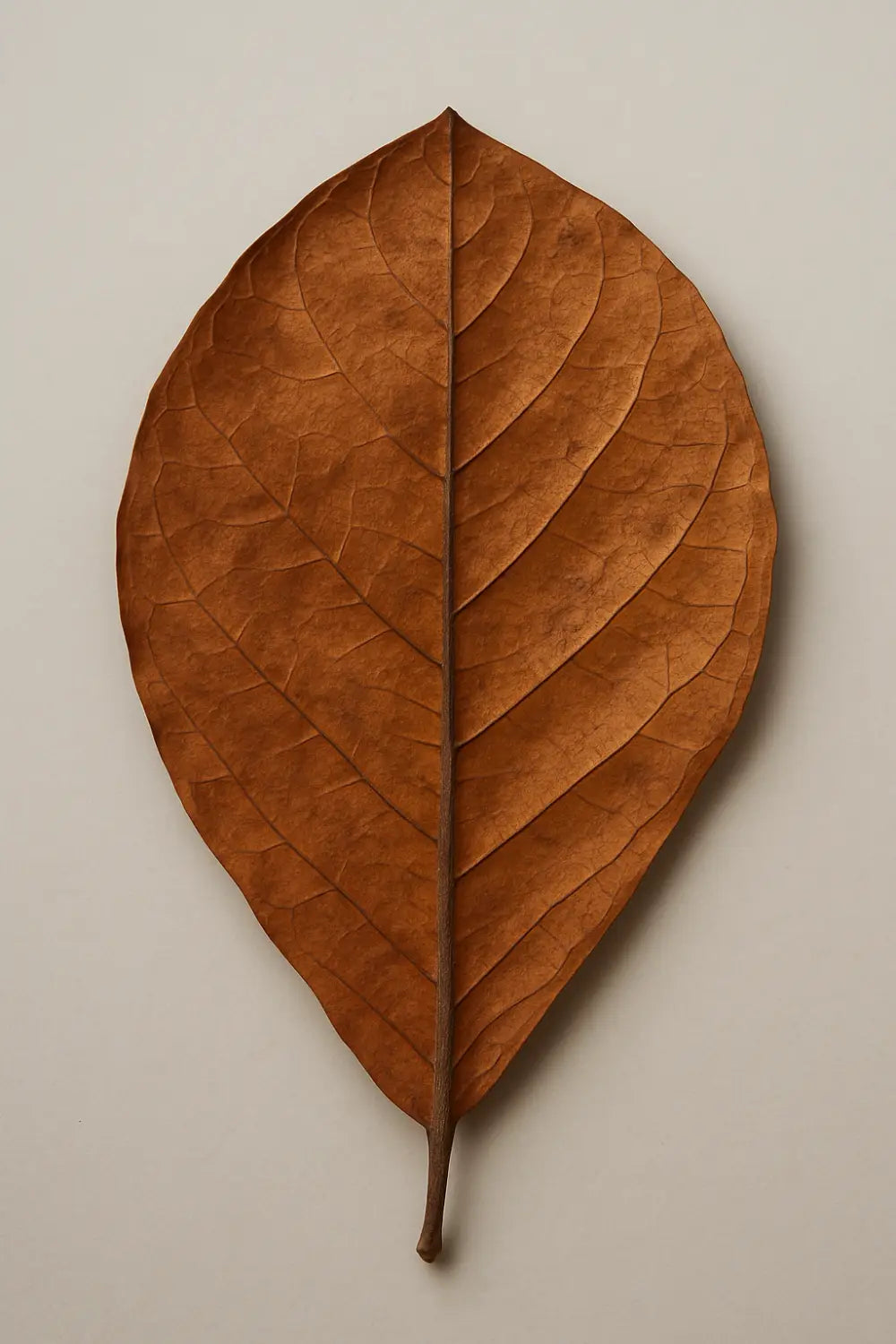
What is a Catappa leaf?
Catappa comes from Terminalia catappa, also known as the tropical almond or Indian almond tree. Its dried leaves have long been used in various types of aquariums.
When submerged, they gradually absorb water and then release tannins and various plant compounds. These tannins sometimes give the water a more or less pronounced yellow to amber coloration.
What are the main benefits of Catappa in an aquarium?
Catappa leaves are beneficial for several reasons, particularly in natural aquariums and shrimp tanks.
- Gradual release of tannins
- Creation of an additional grazing surface
- Progressive development of biofilm and microorganisms
- Addition of a natural element to the decor
- Presence of plant matter in gradual decomposition
- Particularly beneficial for adult and juvenile shrimp
Catappa leaves and Caridina & Neocaridina shrimp
Aquarium shrimp spend much of their time exploring the various surfaces of the tank. They are primarily looking for biofilm, microorganisms, and various food particles.
As it ages in the aquarium, the Catappa leaf gradually becomes a new natural grazing area. It is therefore common to observe Caridina and Neocaridina staying on the leaves for long periods.
Catappa is also particularly useful in aquariums containing juvenile shrimp, which are constantly exploring the various available surfaces.
What are the effects of Catappa tannins?
Catappa leaves gradually release tannins into the water. The amount released depends on the size of the leaf, its condition, the aquarium volume, and how long it remains submerged.
Research has studied certain compounds present in Terminalia catappa as well as the properties of various plant extracts. However, this does not mean that a simple leaf placed in an aquarium can be considered a medicine or a treatment for disease.
In aquarium keeping, it is more accurate to view Catappa as a natural element that provides tannins and an additional surface for biofilm colonization.
Does a Catappa leaf lower the pH?
Catappa releases tannins and organic acids, but its actual influence on pH depends heavily on the water composition.
KH and buffering capacity play an important role. In very soft and poorly buffered water, a variation may be observed. In harder or strongly buffered water, a few leaves will generally have much less effect.
The Catappa leaf should therefore not be used as the primary method for adjusting the pH of an aquarium.
For Caridina kept with remineralized osmosis water and active substrate, parameter stability depends primarily on water preparation and substrate performance.
How to use a Catappa leaf in the aquarium?
Usage is very simple:
- Quickly rinse the leaf with clean water.
- Place it directly into the aquarium.
- Let it float or sink naturally.
- Once soaked with water, it will gradually settle to the bottom.
- Then let the shrimp explore it as it decomposes.
It is generally not necessary to boil a Catappa leaf before introducing it into the aquarium. Boiling it may speed up its sinking, but some of the tannins will be released into the prep water rather than the aquarium.
How many Catappa leaves should you put in an aquarium?
There is no single dosage suitable for all aquariums. The quantity depends on the tank volume, leaf size, water parameters, and the desired effect.
With large 21 to 25 cm Catappa leaves, it is best to start with a moderate amount. In a nano aquarium, it is perfectly fine to cut a leaf into several pieces.
Catappa in a 20 to 30-liter nano aquarium
For a small shrimp aquarium, start with a portion of a large leaf rather than a whole one. You can then adjust the quantity based on the water coloration and the leaf's decomposition.
How long should a Catappa leaf be left in?
A Catappa leaf can remain in an aquarium for several weeks. Its decomposition rate depends on the number of shrimp, the tank's biological activity, and maintenance conditions.
It can be left in the aquarium until advanced decomposition, as long as water quality remains acceptable. In shrimp tanks, it is not uncommon to eventually find only the main veins remaining.
Why do shrimp go on Catappa leaves?
Shrimp do not just come to consume the leaf's plant matter. They primarily exploit everything that develops on its surface: biofilm, microorganisms, and various organic materials.
Catappa thus allows for the addition of a new natural surface in the aquarium, which is particularly beneficial in tanks intended for shrimp breeding.
Catappa and juvenile shrimp
Young shrimp spend a lot of time grazing on the immediately accessible surfaces around them. A mature aquarium including mosses, roots, leaves, and biofilm thus offers them numerous natural feeding zones.
Catappa does not replace a diet suitable for juveniles, but it is an excellent complement to the tank's environment.
For which shrimp should you use Catappa?
Catappa can be used with many species and varieties of freshwater shrimp, including:
- Caridina Crystal Red
- Crystal Black
- Taiwan Bee
- Blue Bolt
- Blue Tiger
- Neocaridina Red Cherry
- Blue Dream
- Bloody Mary
- Sakura
- Yellow Neon
It is also used in many fish aquariums, especially when a natural and slightly amber environment is desired.
Catappa leaf or liquid extract?
Liquid Catappa extracts allow you to quickly add substances from the plant and color the water.
However, the whole leaf offers a major advantage in a shrimp aquarium: it becomes a surface that can be colonized by biofilm and microorganisms.
For a Caridina or Neocaridina aquarium, this aspect is one of the main benefits of the whole leaf.
What size Catappa leaf should you choose?
A large leaf is not necessarily reserved for a large aquarium. It can be easily cut to adapt the quantity to the tank's dimensions.
The leaves offered by Shrimpsfood measure approximately 21 to 25 cm.
Discover our pack of 5 Catappa leaves or view our entire Catappa collection .
Frequently asked questions about Catappa leaves
Why does Catappa color the water?
The yellow or amber coloration comes mainly from the tannins gradually released by the leaf. The larger the quantity of leaves, the more visible this coloration can become.
Can you cut a Catappa leaf?
Yes. This is even a very good solution for nano aquariums. A large leaf can be divided into several portions and used gradually.
Should you remove Catappa when it starts to decompose?
Not necessarily. In a balanced aquarium, it can remain until advanced decomposition. Simply continue monitoring water quality as normal.
Does a Catappa leaf replace shrimp food?
No. It provides an additional natural surface and promotes the presence of biofilm, but it does not replace a diversified diet.
To delve deeper into this subject, discover our complete guide on feeding Caridina and Neocaridina shrimp .
Catappa leaf: a must-have for shrimp aquariums
The Catappa leaf in an aquarium combines several benefits: release of tannins, natural appearance, new grazing surface, and gradual development of biofilm.
It therefore easily finds its place in aquariums dedicated to Caridina, Neocaridina, and juvenile shrimp.
The most important thing is to adapt the quantity to the volume and parameters of your aquarium rather than looking for a universal dosage.