

10 easy freshwater aquarium fish for beginners
Are you looking to set up your first aquarium but don't know which fish to choose? Some species are more accessible than others for beginners, provided you meet their requirements regarding volume, water parameters, temperature, and schooling needs.
In this guide, discover 10 freshwater fish suitable for beginners, along with their main requirements and mistakes to avoid.
Important: A so-called "easy" fish is not one that can withstand poor water quality. The best choice is always a species that is suited to your aquarium and your water parameters.
Which fish should you choose to start an aquarium?
Before choosing a species, first look at:
- the actual volume of the aquarium;
- the water temperature;
- the pH, GH, and hardness of your water;
- the behavior of the species;
- the minimum number of individuals to keep;
- compatibility with other inhabitants.
A species adapted to your water will generally be much easier to maintain than a fish you force to live in parameters that do not suit it.
The 10 easy freshwater fish for beginners
| Fish | Recommended Volume | Temperature | Social Life |
|---|---|---|---|
| Guppy | 60 L and up | 22–26 °C | Group |
| Platy | 80 L and up | 22–26 °C | Group |
| Molly | 100 L and up | 24–28 °C | Group |
| Swordtail | 120 L recommended | 22–28 °C | Group |
| Neon Tetra | 80 L and up | 22–25 °C | School of 10+ |
| Corydoras | 60–100 L depending on species | 22–26 °C | 6 to 8+ |
| Bristlenose Pleco | 100 L and up | 23–27 °C | Depends on setup |
| Zebra Danio | 80 L and up | 18–24 °C | School of 8+ |
| Harlequin Rasbora | 80 L and up | 23–27 °C | School of 8 to 10+ |
| Betta splendens | 20–30 L minimum | 24–28 °C | Alone preferably |
1. The Guppy
The Guppy is one of the best-known fish in the aquarium hobby. Colorful, active, and easy to feed, it can be suitable for beginners if the water is sufficiently hard and mineralized.
- Temperature: 22 to 26 °C
- Recommended volume: from 60 liters
- Behavior: active and generally peaceful
- Water: rather hard to moderately hard
Note: The Guppy reproduces extremely easily. A small population can quickly become large.

2. The Platy
The Platy is robust, colorful, and generally peaceful. It enjoys rather mineralized water and is a good choice for a suitable community aquarium.
- Temperature: 22 to 26 °C
- Recommended volume: from 80 liters
- Behavior: lively but generally peaceful
- Water: rather hard to moderately hard
Like the Guppy, it is a livebearing fish that can reproduce quickly.
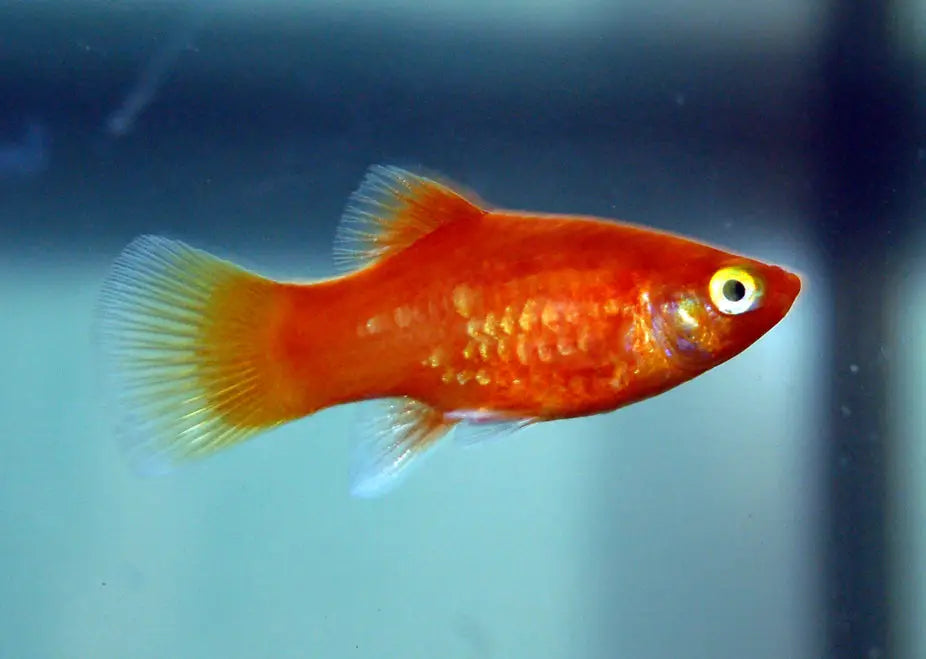
3. The Molly
The Molly is often presented as a very easy fish, but it mainly requires suitable water. It generally prefers hard, alkaline water and requires more space than the Guppy or Platy.
- Temperature: 24 to 28 °C
- Recommended volume: 100 liters or more
- Adult size: approximately 6 to 10 cm depending on variety
- Water: hard and rather alkaline
It can be perfectly suitable for a beginner if the water parameters match its needs.

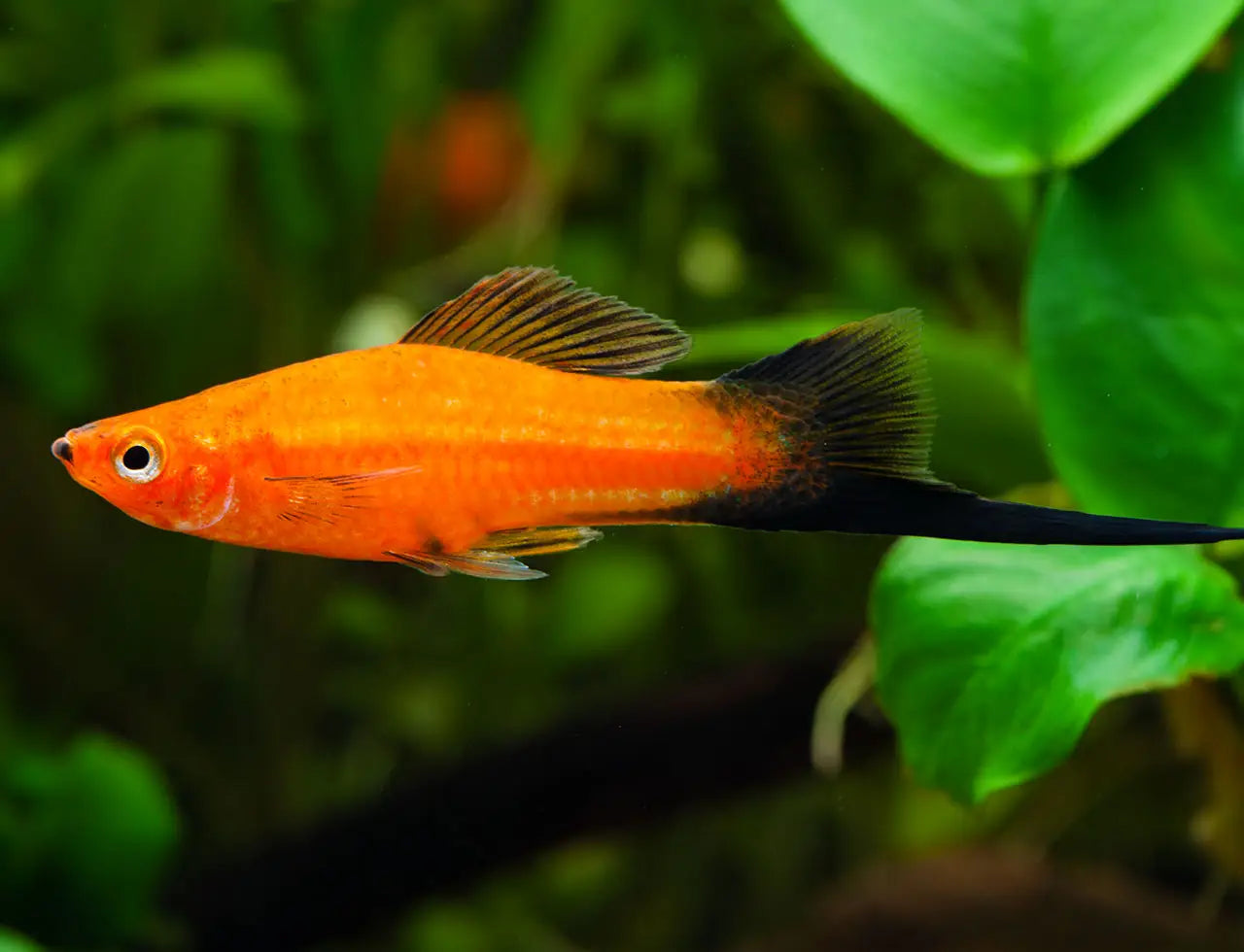
4. The Swordtail
The Swordtail is an active and robust fish, but its size and behavior require a sufficiently spacious aquarium.
- Temperature: 22 to 28 °C
- Recommended volume: about 120 liters or more
- Size: up to about 10 cm
- Behavior: lively
It is best suited for an aquarium that offers plenty of swimming space.
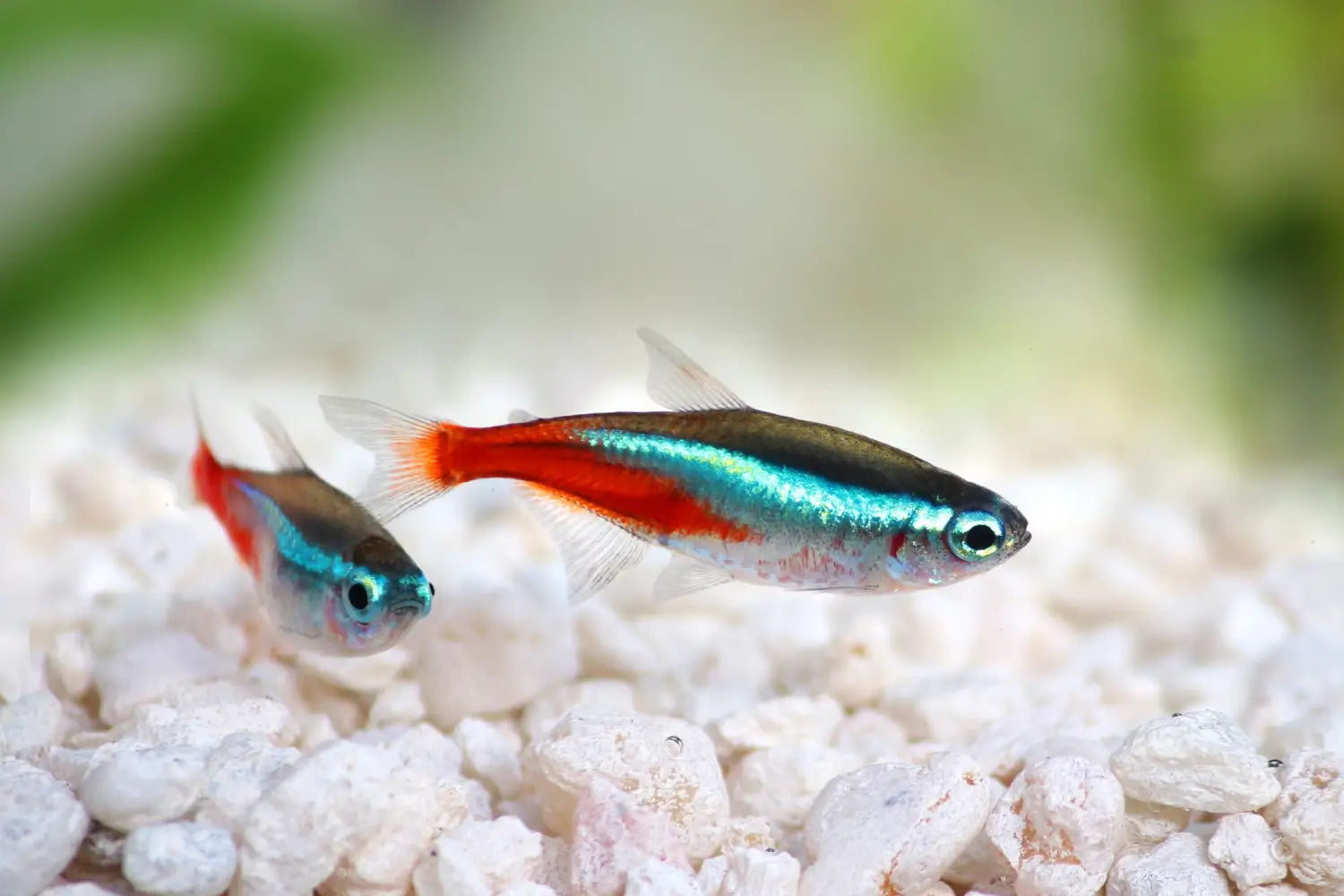
5. The Neon Tetra – Paracheirodon innesi
The Neon Tetra is a very popular small schooling fish. However, it requires a correctly cycled and stable aquarium.
- Temperature: about 22 to 25 °C
- Recommended volume: 80 liters or more
- Group: ideally 10 individuals or more
- Water: rather soft to moderately soft
The Neon is therefore not the best choice for an aquarium that has just been set up, but it becomes relatively simple to maintain in a mature and stable tank.
6. The Corydoras
Corydoras are social and peaceful bottom-dwelling fish. Contrary to a common belief, they are not "cleaner fish" tasked with eating aquarium waste. They must receive a suitable diet.
- Temperature: varies by species, often 22 to 26 °C
- Group: at least 6 to 8 individuals of the same species
- Substrate: fine, non-abrasive sand recommended
- Volume: highly dependent on the chosen species
To start, choose the exact species of Corydoras before determining the necessary volume.
1 comment
- Choosing a selection results in a full page refresh.
- Press the space key then arrow keys to make a selection.
Bonjour j aimerais savoir comment reconnaître les ma des femelles dans les tretra et rasbora arlequin